Popular searches
Check any ingredient in seconds
Type or scan a label
Search an ingredient or E-number by name, or snap a photo of any product label.
Get per-ingredient verdicts
Each ingredient is marked halal, haram, or doubtful with a clear explanation and trusted sources.
Shop with confidence
Share the result, check another product, or find halal restaurants nearby.
Common ingredients at a glance
These are the most frequently searched ingredients. Use the tool above for detailed explanations.
Gelatin
Check source (pork vs bovine)
E471
Plant or animal-derived
E120 (Carmine)
Insect-derived colorant
Glycerin (E422)
Check if vegetable-based
Lard
Pork fat
Vanilla Extract
Contains alcohol carrier
Lecithin (E322)
Typically soy or sunflower
Citric Acid (E330)
Plant-derived
Pectin (E440)
Fruit-derived, gelatin alternative
L-Cysteine (E920)
Check source (hair vs synthetic)
Shellac (E904)
Insect secretion, scholars differ
Rennet
Microbial rennet is halal
Understanding halal food ingredients
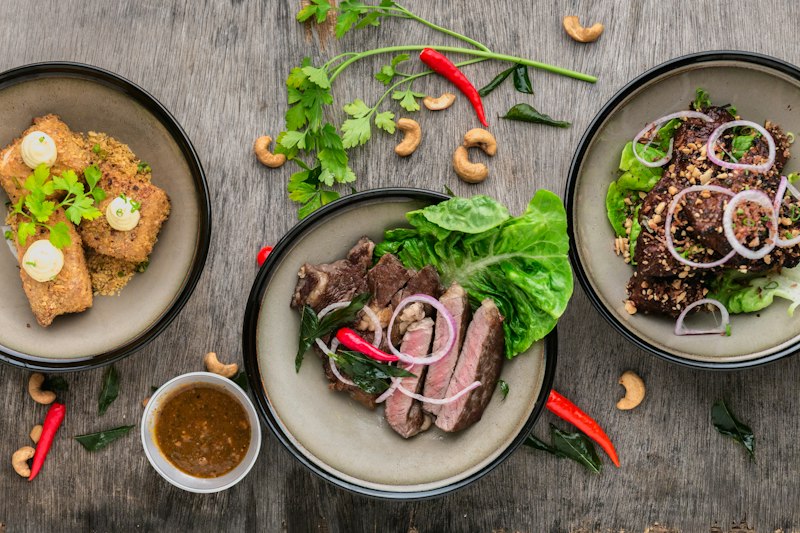
What makes food halal?
Halal food adheres to Islamic dietary guidelines derived from the Quran and Hadith. Beyond the well-known prohibition of pork and alcohol, halal extends to how animals are slaughtered, the source of food additives, and how food is processed and prepared.
Halal (Permissible)
Clearly allowed with scholarly consensus. Most fruits, vegetables, grains, and plant-derived additives.
Haram (Forbidden)
Explicitly prohibited. Pork and its derivatives, alcohol, improperly slaughtered animals, and certain insects.
Mashbooh (Doubtful)
Could be halal or haram depending on the source. Gelatin, glycerin, and many E-numbers fall here. Always verify with the manufacturer.
Halal E-number guide by category
E-numbers are standardized codes for food additives. Here is a quick overview of common ranges and their typical halal status.
Colors
Examples: E100 (Turmeric) - Halal, E120 (Carmine) - Haram, E160b (Annatto) - Halal
Most plant-derived colors are halal. Watch for E120 (insect-derived).
Preservatives
Examples: E202 (Potassium Sorbate) - Halal, E211 (Sodium Benzoate) - Halal
Generally halal. Mostly synthetic or plant-derived.
Antioxidants & Acids
Examples: E300 (Vitamin C) - Halal, E322 (Lecithin) - Halal, E334 (Tartaric Acid) - Halal
Almost all halal. Derived from plants or produced synthetically.
Emulsifiers & Thickeners
Examples: E406 (Agar) - Halal, E412 (Guar Gum) - Halal, E471 (Mono/Diglycerides) - Mashbooh
Most are plant-derived and halal. E471 and E472 need source verification.
Acids & Minerals
Examples: E570 (Stearic Acid) - Mashbooh, E572 (Magnesium Stearate) - Mashbooh
Mineral-based ones are halal. Fatty acid derivatives need source checking.
Sweeteners & Glazes
Examples: E901 (Beeswax) - Halal, E904 (Shellac) - Mashbooh, E951 (Aspartame) - Halal
Synthetic sweeteners are halal. Glazing agents vary.
Frequently asked questions
What does halal mean in food?
Halal means 'permissible' in Arabic. In food, it refers to items that are allowed for consumption under Islamic dietary law. This includes how animals are slaughtered (zabiha), the absence of pork and alcohol, and ensuring ingredients are sourced from permissible origins.
What is the difference between halal, haram, and mashbooh?
Halal means permissible and safe to consume. Haram means forbidden - this includes pork, alcohol, and improperly slaughtered animals. Mashbooh means doubtful or questionable - the ingredient could be halal or haram depending on its source or processing method. When in doubt, Muslims are advised to avoid mashbooh items or verify with the manufacturer.
Are E-numbers halal?
E-numbers are codes for food additives used in Europe and internationally. Many E-numbers are halal (plant or synthetic origin), but some can be derived from animal sources. For example, E322 (Lecithin) is typically halal (from soy), while E120 (Carmine) is haram (from insects), and E471 (Mono/Diglycerides) is mashbooh because it can come from plant or animal fats.
Is gelatin halal?
It depends on the source. Pork-derived gelatin is haram. Bovine gelatin from halal-slaughtered animals is permissible. Fish gelatin is generally halal. Many halal-conscious consumers use plant-based alternatives like agar-agar or pectin. Always check the packaging or contact the manufacturer to confirm the gelatin source.
Is E471 halal?
E471 (Mono- and Diglycerides of fatty acids) is mashbooh - it can be derived from either plant oils (halal) or animal fats (must be from halal-slaughtered animals). Pork-derived E471 is haram. Many manufacturers now use plant-based (soy or palm) sources, but you should verify with the specific product's manufacturer or look for halal certification on the packaging.
Can I scan a product label instead of typing?
Yes. Switch to "Scan label" and take or upload a photo of the ingredients list on the back of any packaged product. The tool reads the list, then runs each ingredient through our halal database and gives you a per-ingredient verdict plus an overall summary. Photos are analyzed once and never stored.
How accurate is this halal ingredient checker?
Our database contains 50+ hand-verified ingredients sourced from recognized halal certification bodies including IFANCA, JAKIM, MUI, and ISNA. For ingredients not in our verified database, we use AI to provide an informed assessment based on Islamic dietary scholarship. AI-generated results are clearly labeled. We always recommend consulting a qualified scholar or your trusted halal authority for definitive rulings.
Can I check if a restaurant is halal?
This tool checks individual ingredients and food additives. To find halal restaurants near you, visit The Souq's restaurant directory where you can search for halal-certified, community-verified, and self-reported halal restaurants across the country.
What halal certification bodies should I trust?
Trusted halal certification bodies include IFANCA (Islamic Food and Nutrition Council of America), ISNA (Islamic Society of North America), JAKIM (Malaysia), MUI (Indonesia), HFA (UK), and SANHA (South Africa). Each has its own standards and processes. Look for their logos on product packaging for confidence in halal compliance.
More free halal tools
Find halal restaurants near you
The Souq helps you discover halal-certified, community-verified restaurants. Search by cuisine, location, or dietary needs.